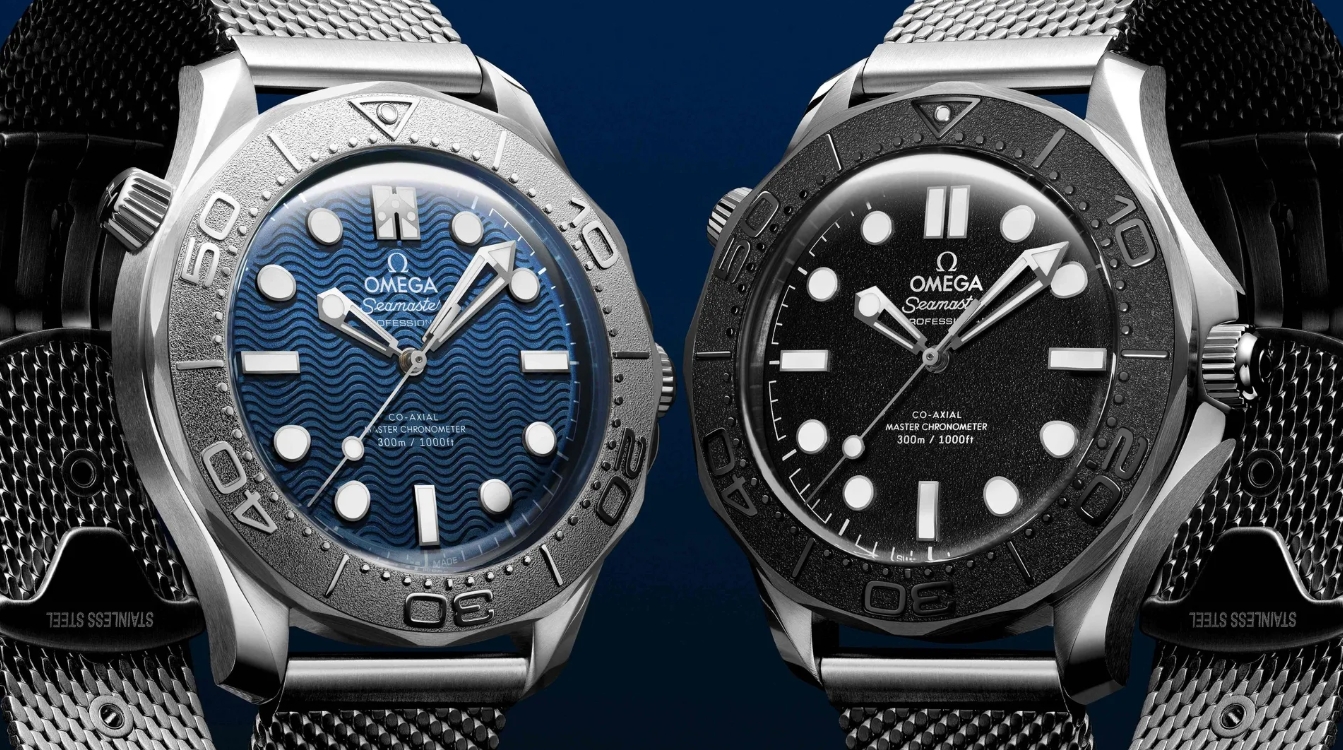
Omega’s blue ceramic Seamaster Diver 300M did not arrive with the usual noise of a major launch. It appeared quietly in the catalogue, but the design is difficult to overlook. The case, bezel, wave dial and rubber strap all lean into the same deep blue colour, giving the watch a much more unified appearance than the familiar steel Seamaster. For anyone assessing an Omega Seamaster Diver 300M replica UK model, that single-colour treatment makes the watch appealing and unusually unforgiving. When nearly every surface is blue, small differences in shade, texture and finishing become obvious.
The genuine watch carries reference 210.92.44.20.03.001 and uses a 43.5mm ceramic case. It is larger than the standard 42mm steel Diver 300M and has a stronger wrist presence, yet its appeal is not simply about size. What gives the design its character is the relationship between the polished ceramic bezel, engraved wave dial, matt rubber strap and cooler titanium details. A replica can copy the outline and still miss that balance completely.
That is why this model needs a more careful review than a quick comparison of logos. On our replica watches UK site, genuine Omega specifications are used as reference points rather than promises about a replica. Omega does not make or authorise replica watches, and third-party versions may use different case materials, movements and levels of water resistance.
Why the blue ceramic design is hard to reproduce
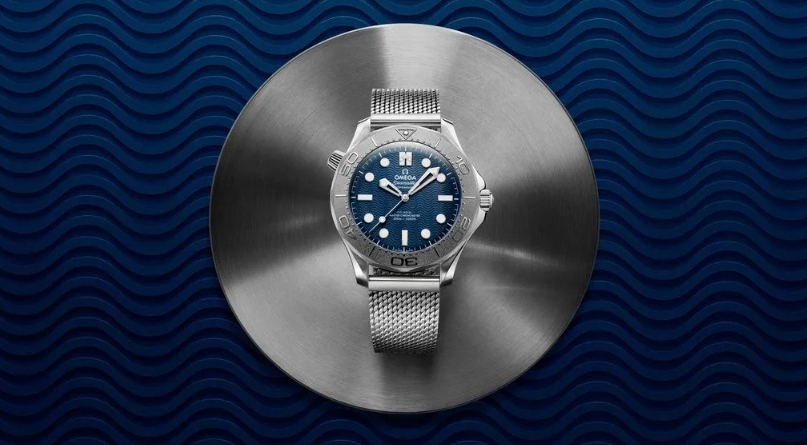
The first thing I would inspect is colour consistency. The authentic watch combines several materials that react differently to light, so the case, dial, bezel and strap should not look like four pieces of flat blue plastic. There should be some variation: the polished bezel reflects more light, the wave dial has depth and the rubber strap appears softer. Even so, the components should still feel as if they belong to the same watch.
Lower-quality versions often reveal themselves here. The bezel may look almost black while the dial shifts towards purple, or the strap may be noticeably brighter than the case. Studio photography can conceal these differences, particularly when contrast and saturation have been increased. A seller should be able to provide an unedited daylight video that moves the watch through several angles. This is far more useful than a row of heavily processed product photographs.
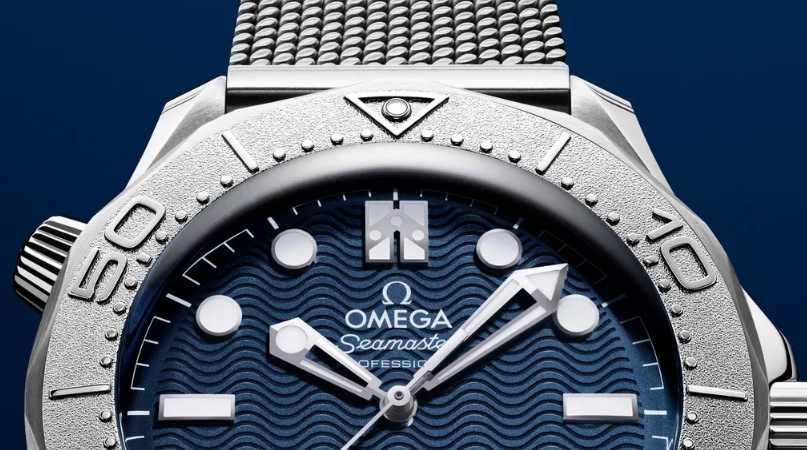
The dial deserves equal attention. Omega uses a laser-engraved wave pattern on the genuine model, with clean lines that flow around the applied hour markers. On a blue ceramic Omega Seamaster replica with an engraved wave dial, the waves should have visible texture without looking deeply carved or rough. Uneven spacing, broken lines and excess paint around the indices become distracting because the no-date layout leaves the dial so open.
This particular configuration also avoids the red accents found on some steel Seamaster references. The Seamaster lettering and seconds-hand tip are white, creating a cooler and more restrained look. A date window, bright red text or a conventional steel case would not be a harmless factory variation; those features would belong to a different Seamaster design.
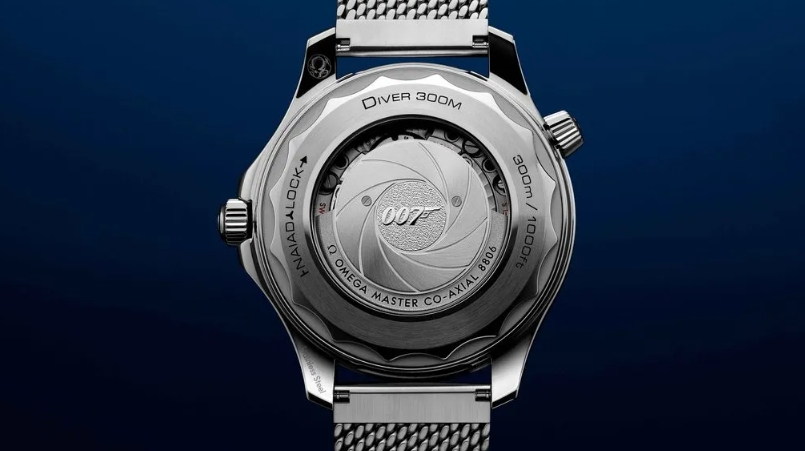
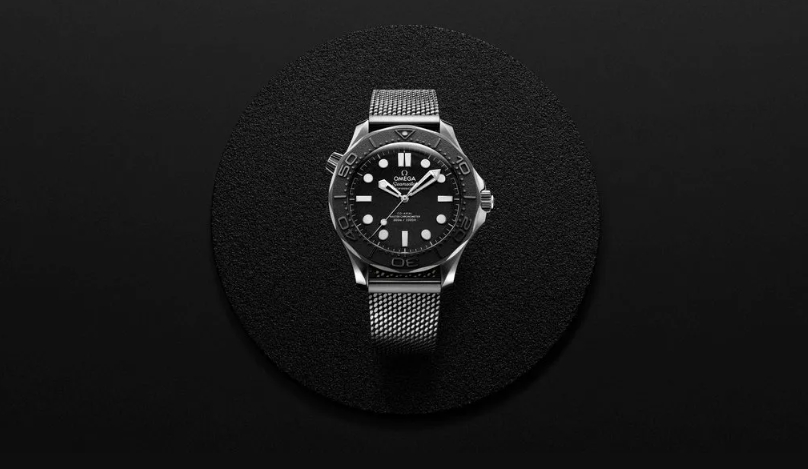
The five supplied images are useful for comparing blue and black Seamaster dials, mesh bracelets, casebacks and wave patterns, but most appear to show steel-cased watches rather than the all-blue ceramic model discussed here. They should therefore be labelled as comparison images. Presenting them as photographs of reference 210.92.44.20.03.001 would create a mismatch between the article and the visual evidence.
Case proportions dial details and real wrist fit
At 43.5mm across and roughly 14.3mm thick, the genuine ceramic Diver 300M is not a discreet watch. The broad bezel, crown guards, helium escape valve and integrated strap add to its visual width. Those proportions can work well on a larger wrist, but buyers who usually wear a 40mm watch should not assume the curved case will make the difference disappear. It is worth checking the lug-to-lug measurement and asking for a wrist photograph taken from a normal distance rather than relying on a close-up that makes every watch look larger.
Replica listings frequently use “same size as original” without supplying measurements. That phrase is not enough. A case that is slightly too thin changes the relationship between the bezel, mid-case and display back, while a bulky case can make the crown and helium valve look undersized. Ask for actual measurements taken with callipers. The shape of the integrated strap also matters because a stiff first section may cause the watch to sit above a smaller wrist.
Ceramic is highly resistant to ordinary surface scratches, but it is not immune to damage from a sharp impact. Some replica cases may instead use coated steel or a composite material while still being advertised as ceramic. The difference affects weight, colour and long-term wear. A credible description should identify the material directly and show the case from the side, including the edges around the lugs and crowns.
On the genuine watch, the metal components use Grade 5 titanium, including the parts around the case and the pin buckle. A replica may substitute stainless steel. That is not automatically a reason to reject it, but it should be disclosed because steel has a different tone and weight. The rubber strap should meet the case cleanly, taper naturally and hold its keepers in place. A visible gap at the end link or a poorly shaped buckle can make an otherwise decent watch feel unfinished.
The bezel is another quick test. Its triangle should align with the 12 o’clock marker, and the minute scale should remain evenly positioned around the insert. The polished surface should not show cloudy areas, glue or a rough outer edge. On the dial, check the length of the skeletonised hands, the placement of the applied indices and the cleanliness of the lume. A high quality Omega Seamaster replica without a date window has fewer distractions, so crooked markers and uneven printing stand out immediately.
Readers comparing this watch with the steel Diver 300M, Bond editions or older blue references can browse the Omega Seamaster replica section. Looking across several models helps prevent a seller from combining the dial of one reference with the case, strap or bezel of another.
Movement claims water resistance and the sensible conclusion
The genuine blue ceramic Seamaster uses Omega’s automatic Calibre 8806. It is a no-date co-axial movement with Master Chronometer certification and a stated power reserve of approximately 55 hours. Those facts belong to the authentic Omega. They do not confirm what sits inside a replica, even if a seller uses the number 8806 in the product title.
Most replica versions use a third-party automatic movement, sometimes decorated to resemble the genuine calibre through the display caseback. A signed rotor and similar bridge layout are visual details; they do not create a genuine Calibre 8806 or Omega certification. Before buying, ask for the actual movement name, beat rate, expected power reserve and information about replacement parts. Clear, ordinary answers are more valuable than phrases such as “original movement,” “Swiss grade” or “perfect clone.”
This matters beyond accuracy. A simple movement that a UK watchmaker can service may be a better ownership prospect than an elaborate decorated mechanism with no available parts. Buyers looking for a replica Omega dive watch with an automatic movement should consider future repair costs as seriously as the appearance of the caseback.
Water resistance also needs to be separated from the model name. “Diver 300M” describes the genuine Omega specification, not a guarantee that every replica can survive 300 metres of pressure. Even a screw-down crown and helium escape valve do not prove the seals have been installed correctly. Unless the individual watch has passed a documented pressure test, it should not be worn for swimming or diving.
The blue ceramic version is ultimately compelling because it takes the Seamaster’s familiar colour and applies it with unusual confidence. It looks cleaner than the brown ceramic and gold alternative and is easier to wear casually, but its apparent simplicity leaves nowhere for poor execution to hide. The correct shade of blue, engraved waves, no-date dial, case thickness and strap fit all need to agree.
For a UK buyer, the most useful listing will provide natural-light images, exact dimensions, the real case material and an honest movement description. It will also explain after-sales support instead of depending on vague “1:1” claims. A carefully assessed Omega Seamaster replica UK blue ceramic model can capture the character of the genuine design, but it should still be understood as an interpretation rather than treated as technically identical to an authentic Omega.
